


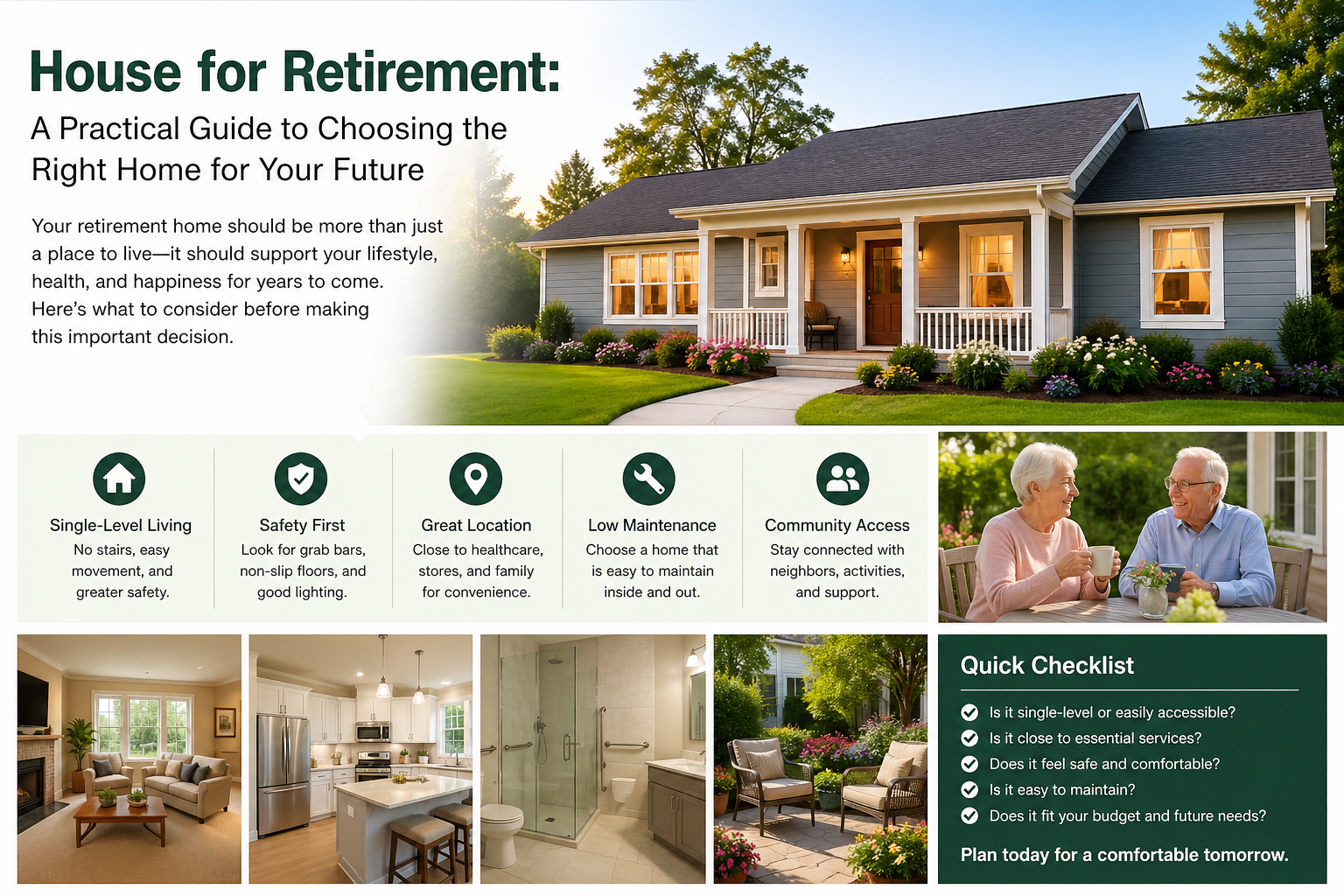


Choosing a house for retirement is one of the most important decisions you’ll make for your future. Unlike regular home buying, this decision isn’t just about budget or location—it’s about comfort, safety, and how well the home will support your lifestyle over time.
A well-chosen retirement home can make daily life easier, more independent, and less stressful. But the wrong choice can lead to ongoing challenges. That’s why it’s important to approach this decision with clarity and long-term thinking.
What Makes a House Suitable for Retirement?
Not every home is designed for aging comfortably. When evaluating a house for retirement, focus on features that support ease of living.
Single-Level Living
Stairs can become difficult over time. A single-floor home reduces risk and improves accessibility.
Wide Doorways & Open Layout
These features allow easier movement, especially if mobility support is needed in the future.
Safety Features
Look for:
- Non-slip flooring
- Grab bars in bathrooms
- Good lighting throughout the home
Low Maintenance Design
A retirement home should reduce effort—not increase it. Smaller spaces or managed properties can help.
Choosing the Right Location


Location plays a major role in selecting the right house for retirement.
Consider:
- Healthcare Access: Proximity to hospitals and clinics
- Daily Essentials: Grocery stores, pharmacies, and services nearby
- Community Environment: Quiet, safe, and easy to navigate
- Connectivity: Good roads and access for family visits
For example, cities like Belleville are often preferred because they offer a balance of peaceful living and essential services.
Independent House vs Retirement Community
When planning a house for retirement, you’ll typically choose between two options:
Independent House
- Full privacy and control
- Suitable for active seniors
- Requires maintenance and upkeep
Retirement Community
- Maintenance-free living
- Built-in social environment
- Access to support services if needed
👉 The right choice depends on your lifestyle and how much independence vs convenience you prefer.
Cost vs Long-Term Value


When selecting a house for retirement, don’t focus only on purchase price. Think long-term:
- Maintenance costs
- Utility expenses
- Accessibility upgrades (if needed later)
- Potential healthcare-related adjustments
👉 A slightly higher upfront investment in the right home can save significant costs and stress later.
Common Mistakes to Avoid
Many people make avoidable mistakes when choosing a :house for retirement
- Buying a large home that becomes difficult to manage
- Ignoring future mobility needs
- Choosing a location far from essential services
- Focusing only on price instead of practicality
Planning ahead helps avoid these issues and ensures a smoother retirement lifestyle.
When to Consider Assisted or Supported Living
In some cases, a traditional house may not be the best long-term option.
If daily support becomes necessary, exploring communities like
Livita Bridge Street Retirement Residence can provide a better balance of independence and care.
These options offer safety, support, and a community environment that a private home may not provide.
Final Thoughts
Choosing the right house for retirement is about creating a space that supports your lifestyle—not just today, but for years to come.
The ideal home should:
- Be easy to live in
- Reduce daily effort
- Support independence
- Adapt to changing needs
With the right planning and clear priorities, your retirement home can become a place of comfort, stability, and peace of mind.




 English
 Indonesia
 Arabic
 French
 Spanish
 Portuguese
 Deutsch
 Dutch
Dutch
 Italiano
 Russian
 Romaian
 Portuguese (Brazil)
 Greek
Greek