


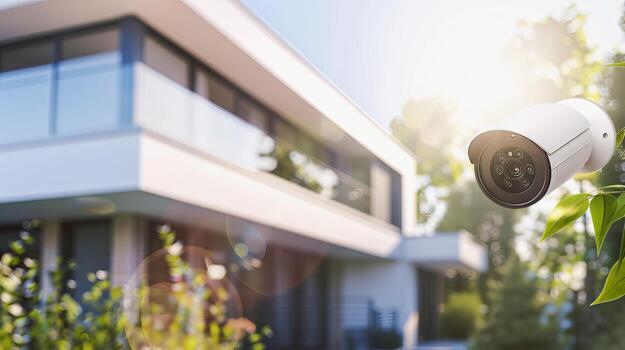
The global Smart Home Security Camera Market has experienced explosive growth over the past five years, transitioning from a niche luxury to a mainstream household essential. As concerns about property crime, package theft, and remote home monitoring intensify, consumers are increasingly turning to intelligent camera systems that offer more than just video recording. These devices now integrate seamlessly with broader smart home ecosystems, providing real-time alerts, two-way audio, and cloud storage. This market encompasses everything from simple indoor pan-tilt cameras to sophisticated outdoor units with facial recognition and color night vision. The shift toward DIY installation and subscription-free options has further democratized access, making smart security cameras a common sight on porches, in nurseries, and along driveways worldwide.
Market Overview and Introduction
The smart home security camera market has evolved rapidly from its early days of grainy, wired closed-circuit television (CCTV) systems. Today’s offerings are characterized by high-definition video, artificial intelligence (AI)-powered person detection, and seamless integration with voice assistants like Amazon Alexa and Google Assistant. Home surveillance systems have moved beyond simple deterrents to become proactive safety tools that can differentiate between a stray cat, a falling leaf, and an intruder. The market is segmented by product type (indoor, outdoor, doorbell cameras), connectivity (Wi-Fi, cellular, PoE), and power source (battery, wired, solar). Major players include Ring, Arlo, Google Nest, TP-Link, and Eufy, but the space is also seeing innovative startups offering specialized features like privacy shutters and on-device AI processing. The COVID-19 pandemic accelerated adoption as people spent more time at home and became acutely aware of security gaps, a trend that has persisted even as normalcy returns.
Key Growth Drivers
Several factors are propelling the growth of the smart home security camera market. First, the dramatic drop in component costs—particularly CMOS sensors, processors, and wireless chips—has made high-quality cameras affordable for the mass market. Second, the proliferation of gigabit-speed home internet and reliable Wi-Fi has enabled smooth streaming of 4K video without buffering. Third, rising crime rates in urban and suburban areas, combined with the epidemic of package theft (porch piracy), have created tangible demand for monitoring solutions. Fourth, the expansion of home insurance discounts for professionally monitored security systems incentivizes purchases. Fifth, the aging population increasingly uses these cameras to check on elderly relatives living alone. Sixth, the integration of smart cameras with other IoT home security devices—such as smart locks, lights, and alarms—creates a compelling whole-home ecosystem that is greater than the sum of its parts.
Consumer Behavior and E-commerce Influence
Consumer behavior has shifted dramatically toward online research and purchasing, with e-commerce platforms like Amazon, Best Buy, and manufacturer direct sites dominating sales. Customers now expect detailed comparison tools, user-generated video samples, and extensive review sections before making a decision. Subscription models have become a major point of consideration; consumers are increasingly savvy about the long-term costs of cloud storage plans and are showing a preference for cameras with local storage options (microSD cards or home hubs). The influence of social media, particularly YouTube and TikTok, cannot be overstated—viral videos of cameras capturing meteors, wildlife, or thwarted burglaries serve as powerful marketing. Additionally, the rise of the “prosumer” (professional consumer) who installs complex multi-camera systems themselves has led to a booming market for online tutorials and community forums. E-commerce has also enabled direct-to-consumer brands to bypass traditional retail, offering feature-rich cameras at lower prices by cutting out middlemen.
Regional Insights and Preferences
The smart home security camera market shows distinct regional preferences. North America, particularly the United States, is the largest and most mature market, driven by high disposable incomes, a strong DIY culture, and widespread concerns about porch piracy. European consumers, especially in Germany and the UK, prioritize data privacy and GDPR compliance, favoring cameras with local processing and transparent cloud policies. The Asia-Pacific region is the fastest-growing market, with China leading in production and domestic adoption, while India and Southeast Asia see rising demand due to increasing urbanization and middle-class expansion. In Japan and South Korea, compact, aesthetically pleasing cameras that blend with home decor are preferred. Latin America and the Middle East show strong growth in professionally installed, high-end systems due to higher concerns about violent crime and a preference for concierge-style service. Australia and New Zealand have high adoption rates for outdoor battery-powered cameras, driven by large properties and wildlife monitoring.
Technological Innovations and Emerging Trends
Innovation in this market shows no signs of slowing. Key trends include the shift from cloud-based AI to on-device (edge) AI, which reduces latency, preserves bandwidth, and enhances privacy by processing video locally. Another major trend is the integration of radar and thermal sensing alongside traditional optical cameras, allowing detection through walls and in complete darkness. Smart cameras are also becoming proactive rather than reactive; they can now recognize specific individuals (facial recognition), vehicle license plates, and even unusual sounds like breaking glass or smoke alarms. Color night vision, once a premium feature, is becoming standard even on budget models. The emergence of cellular-connected cameras (4G/5G) provides security for locations without Wi-Fi, such as construction sites or vacation cabins. Finally, the convergence of security cameras with smart displays means a single device can serve as a video calling portal, digital photo frame, and security sentinel.
Sustainability and Eco-friendly Practices
Sustainability is increasingly influencing product development. Manufacturers are moving toward recyclable packaging, reducing plastic use, and offering repair programs rather than forced replacements. Solar-powered cameras have gained popularity, eliminating battery waste and reducing electricity consumption. Some companies have introduced modular cameras where individual components (lens, battery, sensor) can be replaced, extending product lifespan. Energy efficiency has improved dramatically; modern cameras use low-power chips and can enter deep sleep states between motion triggers, allowing months of battery life. E-waste recycling programs, where old cameras are returned and disassembled for raw materials, are being adopted by major brands. Additionally, the shift to local storage reduces the carbon footprint of cloud data centers, though this trade-off is complex. Consumers are showing a willingness to pay a premium for “green” cameras, particularly in Europe, driving further innovation in sustainable design.
Challenges, Competition, and Risks
Despite growth, the market faces significant challenges. Privacy concerns remain the number one barrier; stories of hacked cameras being used to spy on occupants have eroded trust. Cybersecurity risks are real—poorly secured cameras can become part of botnets used for distributed denial-of-service (DDoS) attacks. The market is intensely competitive, with over 100 brands competing, leading to price wars and thin margins for all but the top players. Subscription fatigue is a growing consumer complaint; many buyers resent paying monthly fees for features that were once free. False alerts continue to plague even advanced AI systems, causing user frustration and “alert fatigue.” Interoperability issues between different brands (the lack of a universal standard like Matter for cameras) lock consumers into ecosystems. Finally, supply chain disruptions for semiconductor chips can cause sudden shortages and price spikes, as seen during the pandemic.
Future Outlook and Investment Opportunities
The future of the smart home security camera market is exceptionally bright. By 2030, it is projected that over 60% of households in developed nations will have at least one smart camera. Investment opportunities lie in several areas: companies developing privacy-preserving technologies (differential privacy, homomorphic encryption), those specializing in vertical-specific solutions (e.g., cameras for Airbnb hosts or daycare centers), and startups creating AI that can predict incidents before they happen (predictive security). The integration of cameras with drone technology—home security drones that launch from a charging pad to investigate alerts—is a nascent but exciting field. Another growth area is commercial-residential hybrid cameras for home-based businesses. Geographically, the most attractive investment regions are Southeast Asia and Latin America, where adoption is low but growth rates are high. Investors should also watch for consolidation as larger tech companies acquire successful camera startups to round out their smart home portfolios.
Conclusion
The Smart Home Security Camera Market is no longer just about recording intruders; it has become an integral part of the connected home ecosystem. Driven by falling costs, AI advancements, and changing consumer behaviors, this market will continue to expand. While challenges around privacy and competition persist, the long-term trajectory is clear: smart cameras will become as common as door locks, offering peace of mind and convenience in equal measure.
Access the report in Japanese, German, French, Korean, Chinese, and Spanish through our dedicated language pages




 English
 Indonesia
 Arabic
 French
 Spanish
 Portuguese
 Deutsch
 Dutch
Dutch
 Italiano
 Russian
 Romaian
 Portuguese (Brazil)
 Greek
Greek