


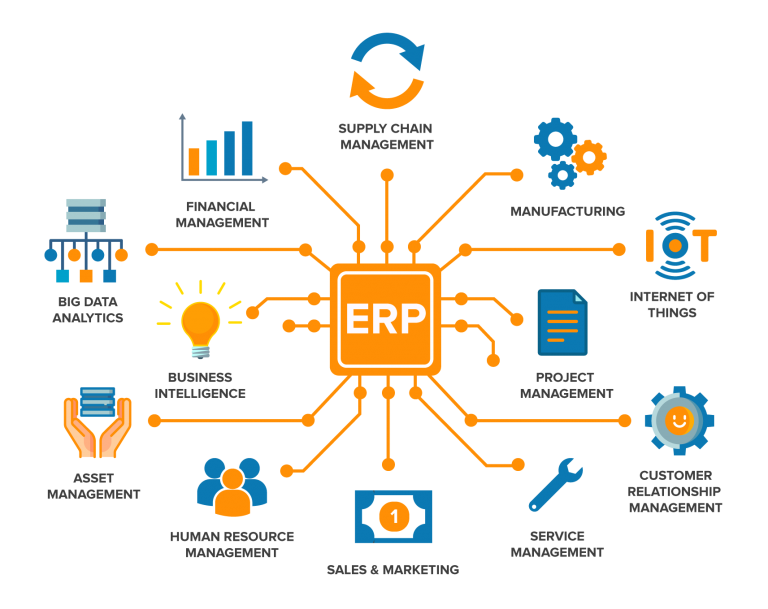
A strategic ERP Software Market Analysis using the SWOT framework highlights an industry that is both a cornerstone of modern business and a source of significant organizational challenge. The primary Strength of ERP software is its ability to provide process integration and a single source of truth. By unifying data from across the enterprise into a central database, an ERP system eliminates data redundancy, improves data accuracy, and provides leaders with a holistic, real-time view of their entire operation. This enables more informed and faster decision-making. A second key strength is operational efficiency. ERP systems automate and streamline core business processes, from financial closing to order fulfillment, which reduces manual effort, minimizes errors, and lowers operational costs. This process standardization also helps to enforce best practices across the organization. Finally, modern ERP systems provide robust reporting and analytics capabilities, allowing businesses to track key performance indicators (KPIs), analyze trends, and gain deep insights into their performance, which is a powerful competitive advantage. These strengths—integration, efficiency, and insight—are the core reasons why millions of businesses have invested in ERP technology.
Despite these powerful benefits, the market is characterized by several significant Weaknesses. The most notorious weakness is the high cost and complexity of implementation. ERP projects are famous for being lengthy, expensive, and disruptive. The costs include not just software licenses but also extensive consulting fees, data migration, and employee training. Failed or delayed ERP implementations are common and can have a crippling effect on a business. A second major weakness is organizational resistance to change. An ERP implementation is not just a technology project; it is a business transformation project. It often requires employees to change the way they have worked for years, which can lead to significant resistance, low user adoption, and a failure to realize the system's promised benefits. A third weakness is the potential for rigidity and lack of flexibility. Traditional, monolithic ERP systems can be difficult to customize and slow to adapt to new business models or changing market conditions. This can stifle innovation and make it difficult for a business to remain agile. Finally, there is the risk of vendor lock-in, where a company becomes so dependent on a single ERP vendor that switching to a competitor becomes prohibitively expensive and complex.
The Opportunities for the ERP software market are vast and are being driven by technological innovation and evolving business needs. The single largest opportunity is the continued penetration of the Small and Medium-sized Business (SMB) market. Historically underserved, SMBs now have access to affordable and easy-to-implement cloud ERP solutions, representing a massive greenfield market for vendors. The integration of Artificial Intelligence (AI) and Machine Learning (ML) into ERP systems is another monumental opportunity. AI can be used to automate complex tasks (like invoice matching), provide predictive analytics (such as forecasting cash flow or customer churn), and deliver intelligent recommendations to users. The integration with Internet of Things (IoT) data also presents a huge opportunity, particularly for manufacturing and supply chain modules, allowing for real-time monitoring of machinery, predictive maintenance, and smarter logistics. The trend towards verticalization—creating highly specialized ERP solutions for specific industries like construction, life sciences, or professional services—is another key growth opportunity, as these solutions can command higher prices and build deeper customer loyalty. Finally, the move towards a more flexible, composable ERP architecture opens up opportunities for a new ecosystem of specialized application and integration providers.
Lastly, a complete analysis must account for the significant Threats facing the ERP market. Cybersecurity is arguably the most prominent threat. An ERP system is the central repository of a company's most sensitive financial, customer, and employee data, making it an extremely high-value target for cybercriminals. A successful breach of an ERP system can be catastrophic. A second threat is the potential for implementation failure. As mentioned, ERP projects are notoriously complex, and a failed project can result in massive financial losses and severe business disruption, which can damage the reputation of both the customer and the vendor. The rise of best-of-breed SaaS applications also poses a competitive threat. Some companies may choose to assemble their own suite of specialized, best-of-breed applications (for CRM, HR, etc.) rather than adopting a single, integrated ERP suite, especially if they perceive the ERP to be too rigid or expensive. Finally, there is a constant threat from disruptive new technologies. While ERP systems are currently central, a future paradigm shift in how businesses are organized or how data is managed could potentially make the traditional ERP model obsolete, requiring the major vendors to constantly innovate to stay relevant in the long term.
Access Customized Regional And Country Reports:




 English
 Indonesia
 French
 Spanish
 Portuguese
 Deutsch
 Turkish
 Dutch
Dutch
 Italiano
 Russian
 Romaian
 Portuguese (Brazil)
 Greek
Greek