


"Discover the fascinating journey of decaffeinated coffee in the U.S., including sustainable techniques like the Swiss Water and CO₂ processes. Explore how American coffee roasters are redefining decaf with eco-friendly and flavorful brews. Perfect for caffeine-free coffee enthusiasts!"
Introduction:
Coffee is more than just a morning ritual; it’s an experience that millions of Americans cherish daily. While many enjoy the energizing kick of caffeine, there’s a growing segment of coffee lovers who prefer a cup without the buzz. Decaffeinated coffee caters to people who want to avoid caffeine for health, lifestyle, or personal reasons while still savouring the rich flavours coffee offers. This blog dives into the fascinating methods of decaffeination, highlighting innovations and practices prevalent in the United States.
How Decaffeination Took Root in America
The journey of decaffeination began in Europe, but the U.S. quickly became a pioneer in refining the techniques. Over time, American coffee companies have developed safer, more efficient, and environmentally friendly methods to meet consumer demands. Today, these techniques are employed by both small artisan roasters and major brands, ensuring options for every taste and budget.
Exploring Decaf Techniques: From Solvents to Sustainability
1. Direct Solvent Process
This method is one of the most widely used in the U.S. It involves steaming green coffee beans to open their pores and then washing them with a solvent like ethyl acetate, a naturally occurring compound found in fruits. The solvent bonds with the caffeine and extracts it from the beans. The beans are then rinsed thoroughly to remove residual solvent, dried, and roasted.
Ethyl acetate is preferred in the U.S. due to its low toxicity and organic origins, making it a safer option than earlier chemicals like benzene. Some American coffee producers market this process as “natural decaffeination,” appealing to health-conscious consumers.
2. The Role of CO₂ in Modern Decaffeination
The CO₂ process has gained traction in the U.S. for its eco-friendly nature. In this method, beans are softened with water and exposed to pressurized carbon dioxide. The CO₂ acts as a solvent, binding with caffeine molecules and leaving behind the other flavour compounds. The caffeine is later separated from the CO₂, which can be reused for future batches.
This method is particularly popular among premium coffee roasters in the U.S. because it maintains the coffee’s natural flavours and aroma while reducing environmental impact. Major coffee brands and speciality shops often advertise this technique as a commitment to sustainability.
3. Organic Approaches to Caffeine-Free Coffee
Although the Swiss Water Process originated in Canada, it’s widely adopted by American coffee producers, especially those emphasizing organic and chemical-free products. This method relies on water, temperature, and time to decaffeinate beans without chemicals.
A batch of green coffee beans is first steeped in boiling water to extract the caffeine. A carbon filter is used to retain other soluble chemicals while trapping the caffeine in this solution. A fresh batch of beans is then soaked in the caffeine-free solution to guarantee flavor consistency.
Brands that use the Swiss Water Process are popular in health-food stores and artisanal coffee shops across the U.S. because the method aligns with the values of clean living and transparency.
The Science Behind Flavorful Decaf Brews
Similar to the Swiss Water Process, the Mountain Water Process is another chemical-free technique that has gained popularity in the U.S. Originating from Mexico, this method uses glacier water from the Pico de Orizaba mountain. The unique water composition is said to enhance the coffee's flavour profile.
Some American roasters collaborate with Mexican producers to source decaffeinated beans processed this way, bringing ethically sourced and flavorful coffee to the market.
Sustainable Decaffeination: Leading the Way in the U.S.
The U.S. coffee market has seen a surge in decaf options, with innovation and variety driving the trend. From single-origin decaf to flavoured blends, there’s something for every palate. Decaffeinated cold brews and nitro coffees are particularly popular among younger consumers seeking a unique coffee experience. Additionally, U.S.-based companies like Seattle’s Best, Peet’s Coffee, and Blue Bottle Coffee are investing in decaf to cater to evolving consumer preferences. These brands emphasize sustainability, fair trade, and health-conscious practices, which resonate with American coffee drinkers.
Best Swiss Water Process Decaf Coffee Brands
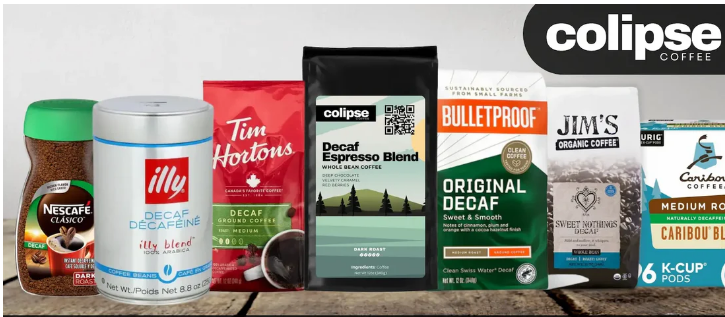
San Francisco Bay Coffee Decaf French Roast OneCUP
Specialty-grade Arabica beans from Brazil, Costa Rica, Colombia, and Guatemala are used in Caribou Blend Decaf K-Cup Pods. The Swiss Water Process is used to decaffeinate Caribou Coffee's medium roast, which is readily available in supermarkets and online at Amazon and Walmart.
Caribou Medium Roast Decaf K-Cup
Coffee pods from premium Arabica beans imported from Central and South America are used by Francisco Bay Coffee in their Decaf French Roast OneCUP. It is a standard dark roast that is easily found in stores and decaffeinated using the Swiss Water Process.
NESCAFÉ Clasico Decaf
CLÁSICO NESCAFÉ Decaf is a dark-roasted instant coffee made from an international hybrid blend of Arabica and Robusta beans. One of the most popular and well-known brands of decaffeinated coffee is Swiss Drinking Water Process.
What Lies Ahead for Decaf Coffee Fans?
While advancements have improved the decaffeination process, challenges remain. For instance, decaffeination is expensive, and the equipment required can be cost-prohibitive for smaller roasters. Additionally, despite significant progress, it’s impossible to remove 100% of the caffeine from coffee beans, though U.S. regulations require decaf to contain no more than 0.1% caffeine.
The Future of Decaf Coffee
Market Research Future magazine forecasts that the global decaf coffee market will grow from $20.37 billion in 2023 to $26.45 billion by 2030, reflecting a compound annual growth rate (CAGR) of 4.45% over the 2023–2030 period. The future of decaf coffee in the U.S. looks bright. As consumer demand for healthier and more sustainable products grows, researchers are exploring innovative solutions like genetically modified coffee plants that produce caffeine-free beans naturally. While these options face regulatory hurdles, they could revolutionize the industry. Moreover, advancements in decaffeination technology are making it more accessible to small and mid-sized roasters, ensuring a broader range of high-quality decaf options for American consumers.
Call to Action
Ready to enjoy a flavorful cup of decaffeinated coffee? Explore your Mutombo Coffee today and discover how modern techniques deliver rich taste without the buzz. Share your thoughts and favourite decaf brews in the comments below!
References:
https://www.healthline.com/nutrition/decaf-coffee-good-or-bad
https://www.sciencedirect.com/topics/food-science/decaffeination
https://www.builtinseattle.com/companies/type/other-industry-companies
https://en.wikipedia.org/wiki/Pico_de_Orizaba
https://colipsecoffee.com/blogs/coffee/decaf-swiss-water-process-brands
https://www.sciencedirect.com/science/article/abs/pii/B9780128173886000118
https://pubchem.ncbi.nlm.nih.gov/compound/Ethyl-Acetate
https://www.mutombocoffee.com/




 Indonesia
 Arabic
 French
 Spanish
 Portuguese
 Deutsch
 Turkish
 Dutch
Dutch
 Italiano
 Russian
 Romaian
 Portuguese (Brazil)
 Greek
Greek