


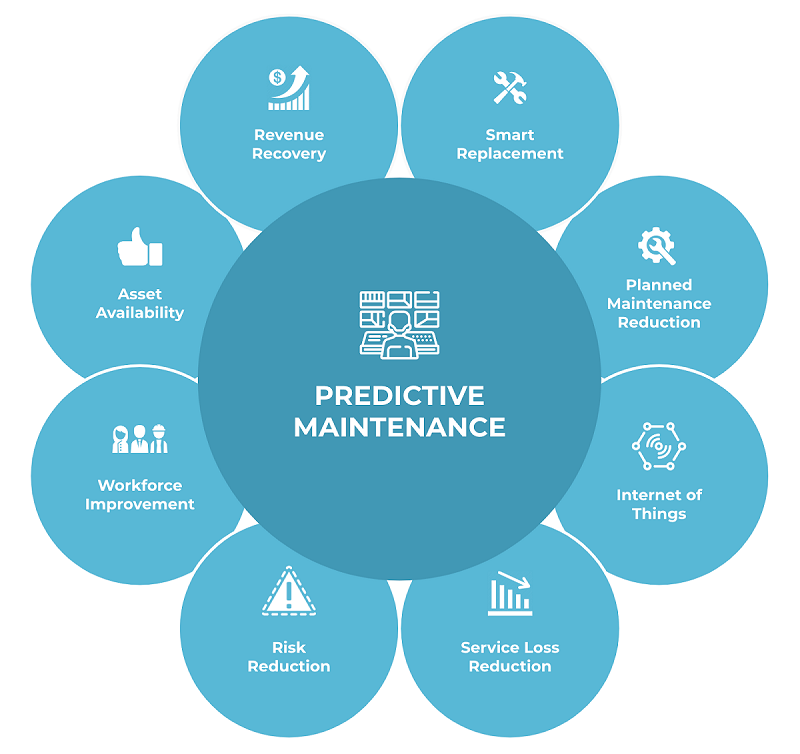
The global industrial landscape is in the midst of a profound transformation, moving away from reactive and scheduled operational models towards a more intelligent, data-driven, and proactive paradigm. At the forefront of this evolution is the rapidly expanding Predictive Maintenance industry, a sector dedicated to forecasting equipment failure before it occurs. This approach represents a monumental leap beyond traditional maintenance strategies. Unlike reactive maintenance, which addresses failures only after they happen (leading to costly unplanned downtime), or preventive maintenance, which often replaces parts based on a fixed schedule (leading to unnecessary costs and waste), predictive maintenance (PdM) uses advanced analytics to determine the optimal moment for intervention. By continuously monitoring the health of assets through a network of sensors and analyzing the resulting data streams, the industry provides the tools and intelligence to fix parts "just in time," maximizing asset uptime, extending equipment life, and dramatically improving operational efficiency. This shift is not just an incremental improvement; it is a fundamental re-imagining of industrial asset management for the digital age, turning maintenance from a cost center into a strategic business advantage.
The ecosystem of the predictive maintenance industry is a complex and symbiotic network of technology providers and domain experts. At its base are the hardware manufacturers, who produce the vast array of sensors—vibration, thermal, acoustic, pressure—that act as the nervous system for physical assets, collecting the raw data that feeds the entire process. This data is then transmitted via a connectivity layer, leveraging everything from factory Wi-Fi to advanced 5G and LPWAN networks. The data then flows to the core of the ecosystem: the software and platform providers. This includes the hyperscale cloud companies (like AWS, Microsoft Azure, and Google Cloud) that offer the scalable storage and computational power needed, as well as specialized PdM software vendors who provide the sophisticated algorithms and machine learning models. Finally, a crucial role is played by system integrators and industrial automation giants (like Siemens, GE, and Honeywell), who possess the deep domain expertise to integrate these technologies into complex industrial environments, understanding the unique failure modes of specific machinery and ensuring the analytics are relevant and actionable for a particular factory, fleet, or facility.
The adoption of predictive maintenance spans a wide and growing array of heavy-asset industries, each realizing profound benefits. In manufacturing, PdM is a cornerstone of the Industry 4.0 revolution, where it is used to monitor everything from robotic arms on an automotive assembly line to CNC machines and conveyor systems, preventing line stoppages that can cost millions of dollars per hour. In the energy and utilities sector, it is used to predict failures in wind turbines, solar panels, and power grid transformers, ensuring a reliable energy supply. The aerospace industry has been a pioneer in this field, with companies like Rolls-Royce and GE using thousands of sensors to monitor aircraft engines in real-time, analyzing data to schedule maintenance and ensure unparalleled levels of safety and reliability. Likewise, the transportation and logistics sector applies PdM to its fleets of trucks, trains, and ships, predicting engine trouble or brake failures to reduce breakdowns, optimize fleet availability, and improve safety on a massive scale. The technology's applicability continues to expand, touching nearly every industry that relies on critical physical machinery.
Ultimately, the predictive maintenance industry is enabling a paradigm shift in how businesses manage their physical assets and workforce. It moves the focus from emergency repairs to planned, data-driven interventions. This has a profound impact on the bottom line by drastically reducing unplanned downtime, minimizing the need for large inventories of spare parts, and extending the useful life of expensive equipment. It also enhances worker safety by preventing catastrophic equipment failures that could endanger personnel. Furthermore, it is transforming the role of the maintenance technician from a reactive "firefighter" to a proactive "data-analyst," using tablets and dashboards to understand the health of their assets and make informed decisions. As businesses face increasing pressure to improve efficiency, resilience, and sustainability, the predictive maintenance industry provides a powerful, technology-driven solution that is becoming not just a competitive advantage, but an operational necessity in the modern industrial world.
Explore More Like This in Our Regional Reports:
Uk Artificial Intelligence Market




 Indonesia
 Arabic
 French
 Spanish
 Portuguese
 Deutsch
 Turkish
 Dutch
Dutch
 Italiano
 Russian
 Romaian
 Portuguese (Brazil)
 Greek
Greek